Last updated November 21, 2026
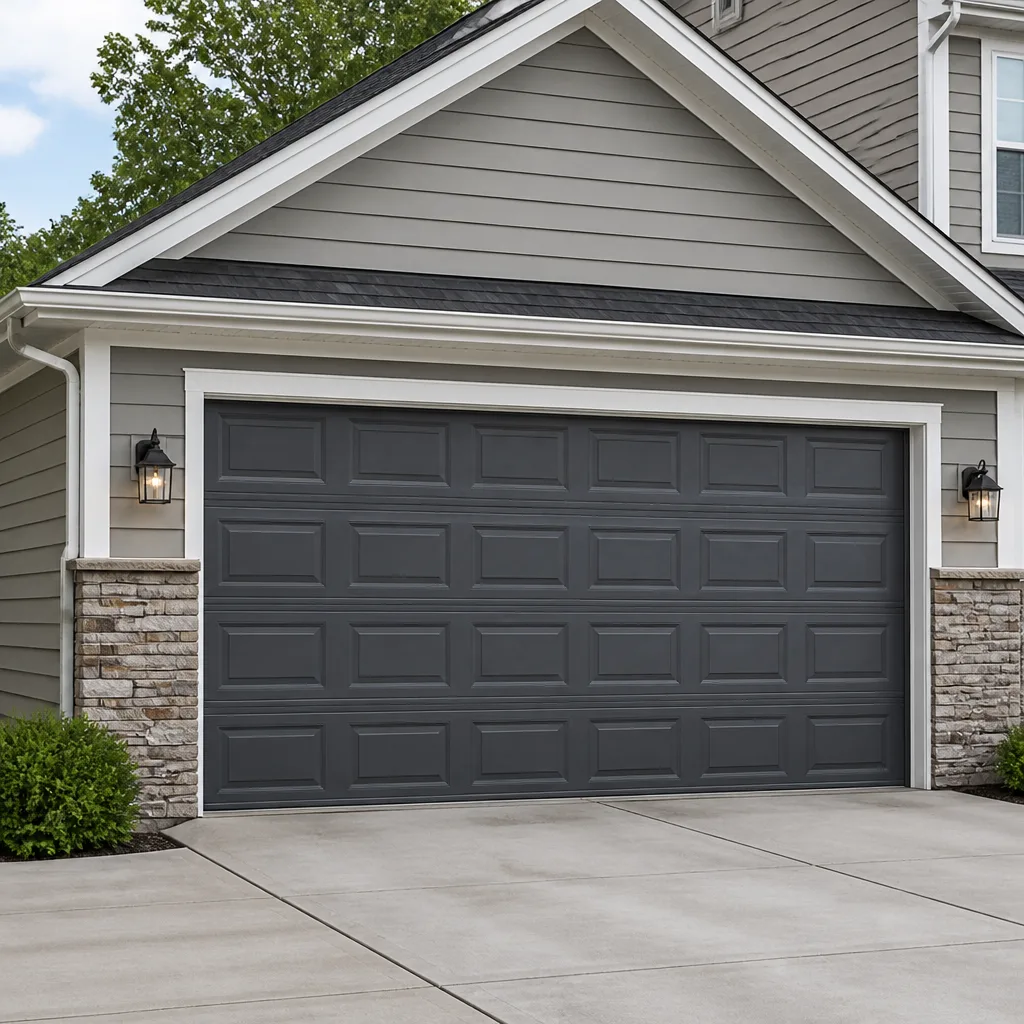 Raised-panel steel
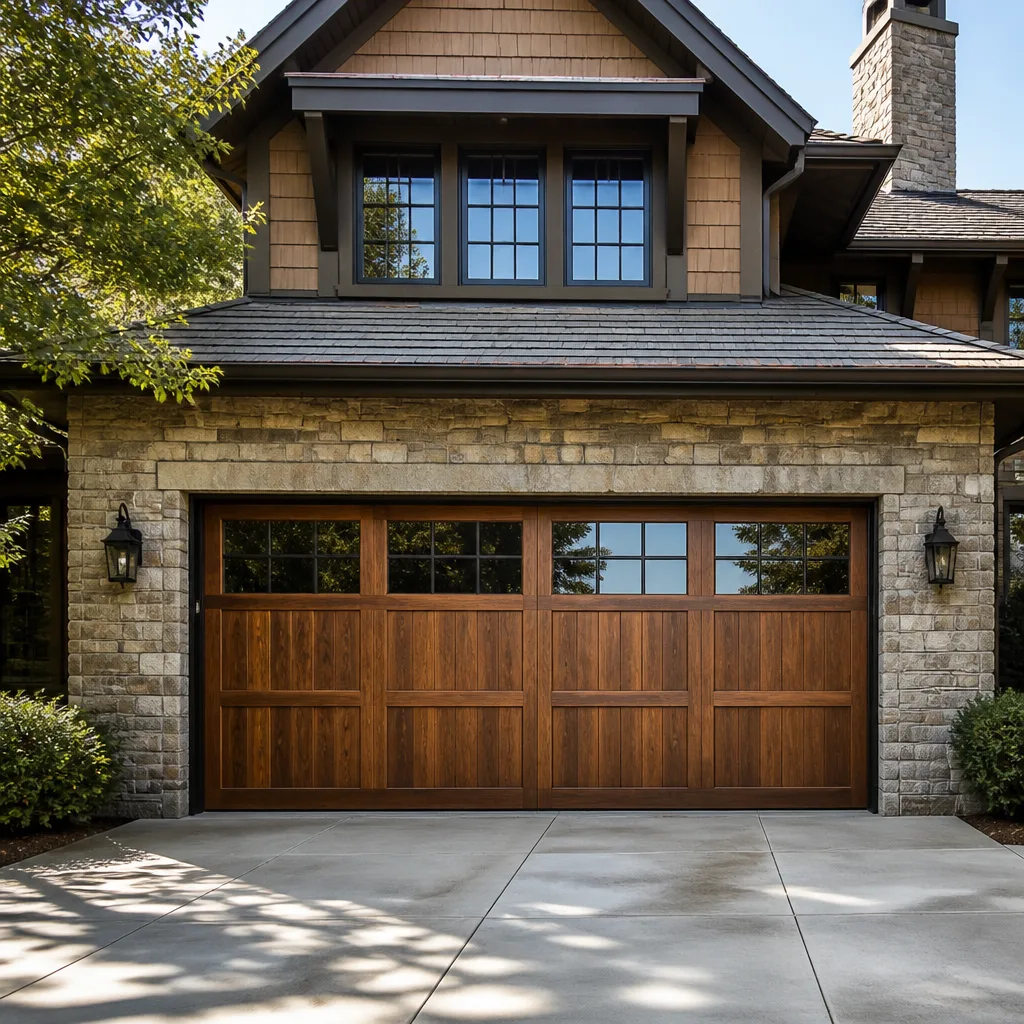 Carriage house
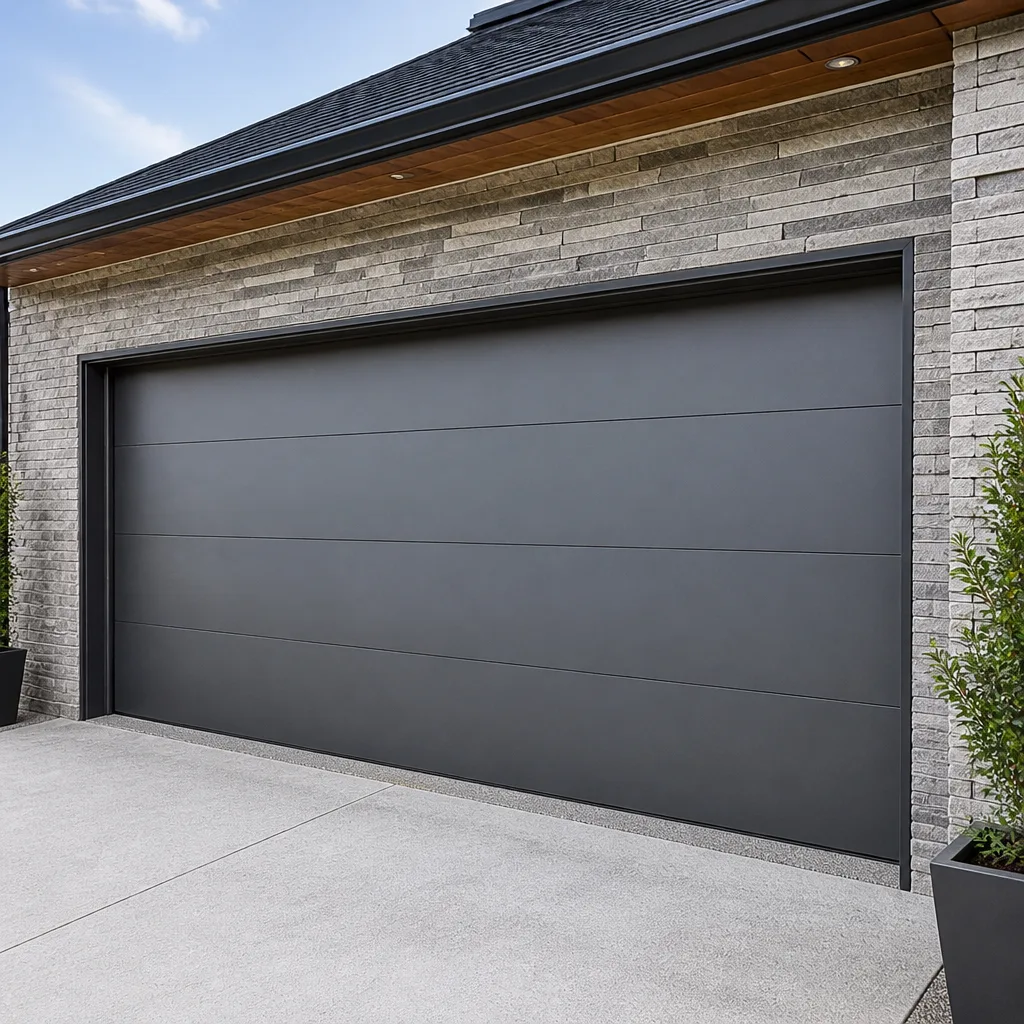 Modern flush
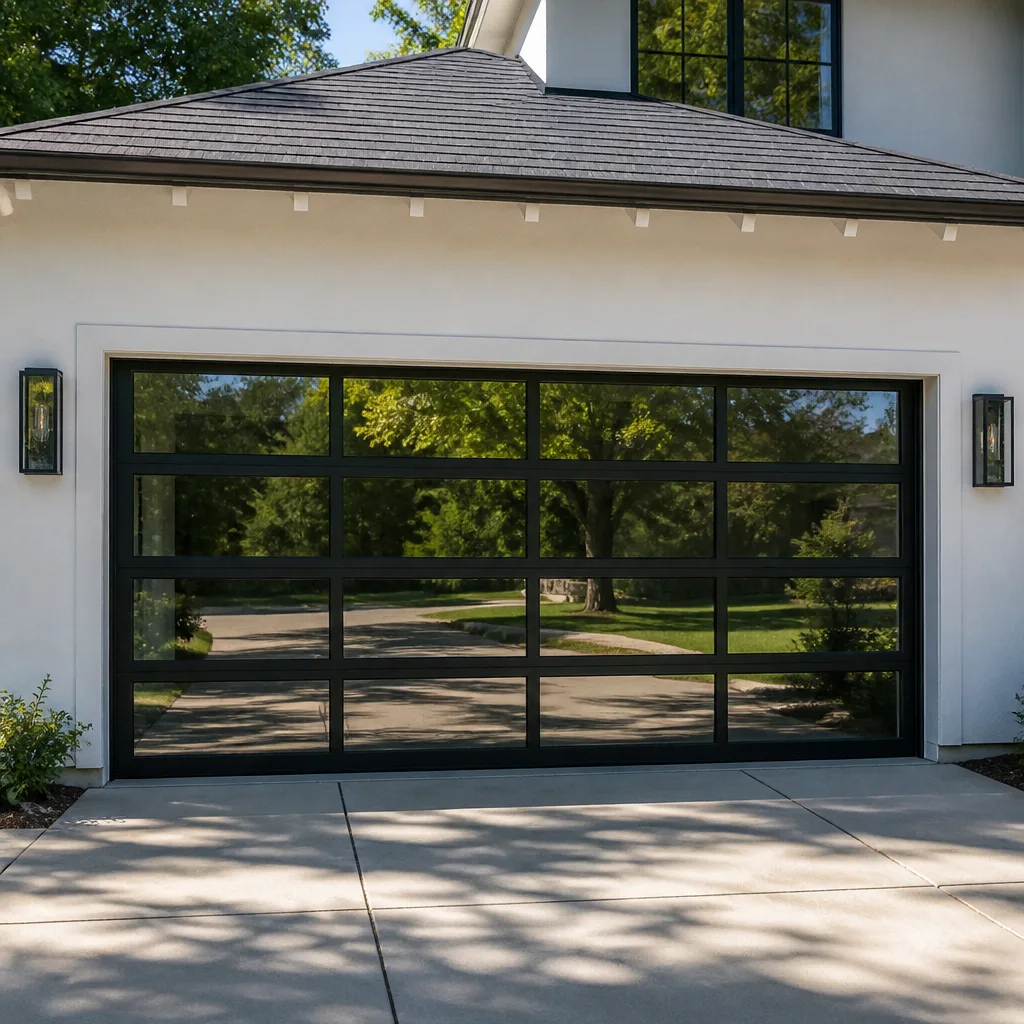 Full-view glass
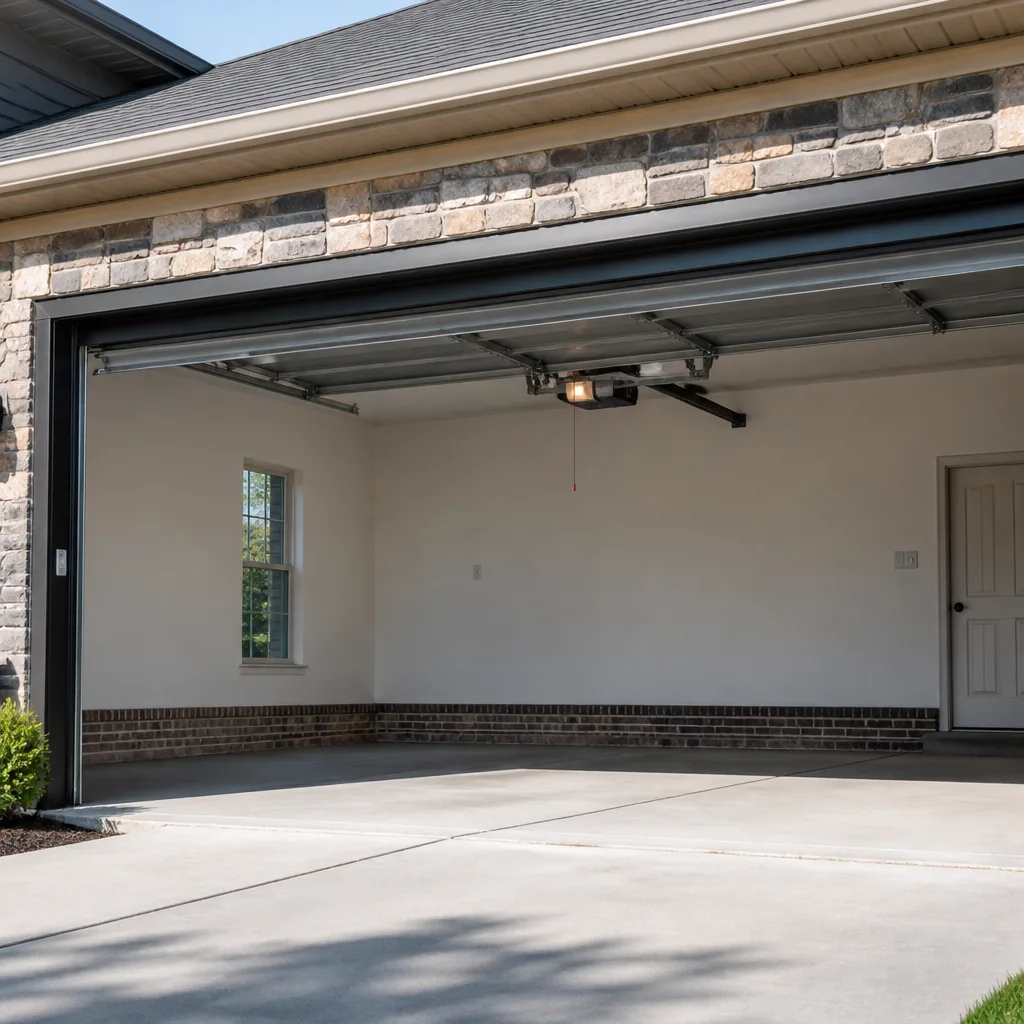 LiftMaster openers
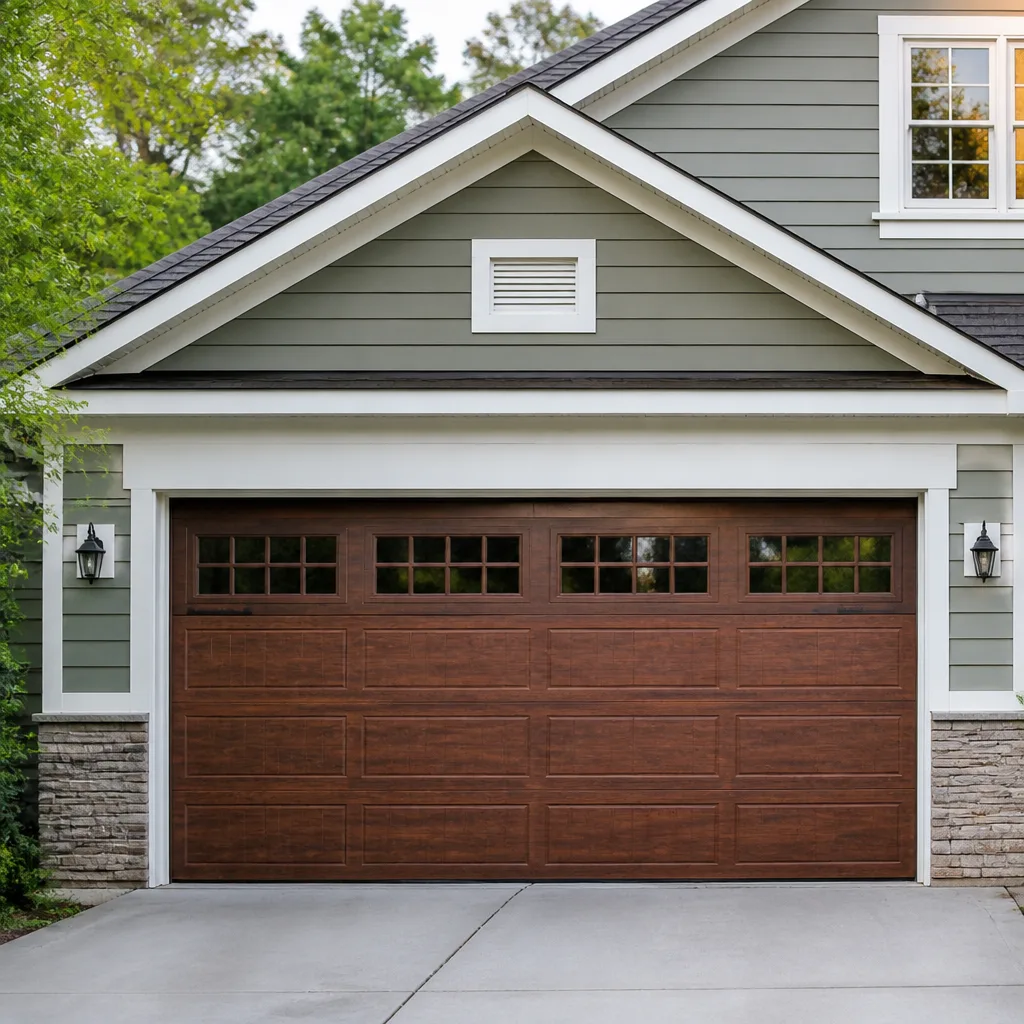 Chamberlain openers
Full 25-point door and opener safety check with every visit - springs, cables, rollers, tracks, and your LiftMaster or Chamberlain opener included
You get a price before we start. It does not change when the pro arrives.
Get your free estimateThe Complete Guide to Garage Doors in St. Louis Hills
Most “complete guides” to garage doors are written for Anytown, USA. Same stock photos, same advice, same useless generalities about “regular maintenance” and “calling a professional.” That advice breaks down fast in St. Louis Hills, where the housing stock runs from 1920s brick Tudors to 1960s ranches, many with non-standard rough openings, shallow headers, and garages that were clearly an afterthought in the original floor plan. A door that fits perfectly two streets over may not fit here at all. And Missouri’s freeze-thaw winters put stresses on springs and tracks that mild-climate advice never accounts for. This guide covers what actually matters for a garage door in St. Louis Hills: sizing, materials, track systems, historic style matching, and the repair-versus-replace math that too many homeowners get wrong.
Quick Answer
Garage door work in St. Louis Hills comes down to three things: measuring the actual rough opening (not assuming a standard size), choosing a material that survives Missouri humidity and freeze-thaw cycles, and knowing when a repair bill has crossed the line into replacement territory. Older homes in this neighborhood frequently need low-headroom track systems and custom-sized doors, which changes both the installation approach and the budget. The written estimate always sets the final price, and every job starts with an on-site measure rather than a phone guess.
Styles & brands we work with
- Raised-panel steel
- Carriage house
- Modern flush
- Full-view glass
- LiftMaster openers
- Chamberlain openers
Table of Contents
- How St. Louis Hills Home Construction Affects Door Sizing
- Steel vs. Wood vs. Fiberglass: What Holds Up Here
- Standard vs. Low-Headroom Track Systems
- Matching a New Door to Historic and Mid-Century Styles
- Repair or Replace? The Full Lifecycle Breakdown
- Why Springs Are the Most Dangerous Part of Your Door
- Opener Brands and What to Know Before You Repair Yours
- What Garage Door Work Typically Costs
How St. Louis Hills Home Construction Affects Door Sizing
The single biggest mistake homeowners make is assuming their garage door is a standard size. In newer subdivisions, it usually is. In St. Louis Hills, it often isn’t. The neighborhood’s housing stock spans roughly four decades of construction, from the 1920s through the 1960s, and garage dimensions shifted with each building era. A Tudor built in the 1930s might have a single-car opening that’s 8 feet wide but only 6-foot-6 high. A ranch from the 1960s might have a double door that measures 15-foot-6 instead of the modern 16 feet. Those inches matter.
Brick facades add another layer. The masonry is load-bearing in many of these homes, which means the header above the garage opening is doing real structural work and can’t simply be modified to accept a wider stock door. Header clearance – the vertical distance from the top of the opening to whatever’s above it, whether that’s a steel beam, a brick lintel, or finished ceiling – determines how much track and hardware can fit. Shallow headers are common on these blocks, and they’re the reason so many St. Louis Hills garages need a low-headroom setup rather than a standard one.
The practical takeaway: any door decision starts with an actual measurement of the rough opening, the header clearance, the side clearance, and the backroom (how far back into the garage the door can travel when open). A quality installation depends on these numbers being right. When you’re ready for a proper measure and a written price, garage door installation starts there, not with a catalog photo.
A few measurements every homeowner should take before calling anyone:
- Opening width, measured at the widest point inside the frame
- Opening height, measured from the concrete floor to the bottom of the header
- Side clearance, from the edge of the opening to the nearest wall or obstruction
- Backroom, from the door to the farthest obstruction behind it (including the opener rail)
- Header clearance, from the top of the opening to the ceiling or beam above
Write these down and keep them handy. They’ll save time on every call and prevent the surprise of a door that arrives the wrong size.
Steel vs. Wood vs. Fiberglass: What Holds Up Here
St. Louis sits in a climate that swings hard. Summer humidity can hang in the 80 and 90 percent range for days, then winter brings repeated freeze-thaw cycles where overnight temperatures drop below freezing and daytime temps climb back above it. Wood expands and contracts with every one of those swings. Steel doesn’t care much. Fiberglass sits somewhere in between. That difference drives most material decisions in this neighborhood, more than aesthetics ever will.
Steel is the most practical choice for most St. Louis Hills homes. It holds its shape through humidity swings, resists the warping that plagues wood in this climate, and comes in insulated versions with decent thermal performance. Modern steel doors can be had with panel designs that mimic the raised-panel look of older carriage doors, so a Tudor or a Colonial doesn’t have to lose its character. The trade-off is that steel dents. On a tight single-car garage where doors get opened by feel in the dark, that matters. Look for heavier-gauge steel if you’re concerned about dent resistance.
Wood looks right on the older homes in St. Louis Hills, and we understand the appeal – nothing else matches the original character of a 1930s brick Tudor. But wood requires real maintenance here. The humidity pushes paint to fail faster than it would in a drier climate, and the freeze-thaw cycle works at joints and seams. An unmaintained wood door will warp, swell, and eventually delaminate. If you choose wood, plan on refinishing every few years, and budget for that cost over the door’s full life rather than just the purchase price.
Fiberglass splits the difference. It won’t rust, it won’t warp the way wood does, and it holds up to humidity better than wood. It’s lighter than steel, which eases strain on the opener and springs. The downsides are that it can crack under impact and its insulation values tend to be lower than well-insulated steel. For a garage that isn’t heated or cooled, that’s often fine.
Honest comparison, sorted by what actually matters in St. Louis Hills:
- Best against humidity swings: steel, then fiberglass, then wood
- Best against freeze-thaw movement: steel, then fiberglass, then wood
- Best for historic character: wood, then steel (with panel detailing), then fiberglass
- Best insulation performance: insulated steel, then insulated fiberglass, then wood
- Lowest maintenance over time: steel, then fiberglass, then wood
Most homeowners in this neighborhood end up happiest with an insulated steel door in a panel style that echoes the home’s era. Manufacturers like Clopay and Amarr make lines that fit that brief. If you want to preserve a genuine historic look and you’re willing to maintain it, wood is still on the table – just go in with clear eyes about the upkeep.
Standard vs. Low-Headroom Track Systems
Low-headroom garage doors aren’t rare in St. Louis Hills – they’re common. Older homes here were often built with lower garage ceilings, shallower headers, or obstructions like plumbing, ductwork, or structural beams that cut into the available vertical space. A standard track system needs a specific amount of headroom above the door to work; if your garage doesn’t have it, the door either won’t open fully or won’t fit at all without a different track setup.
Here’s the practical difference. Standard track uses a 12-inch radius curve between the vertical and horizontal sections, and typically needs 12 to 15 inches of headroom above the door. Low-headroom track uses a tighter 4- or 6-inch radius, and gets the door tucked closer to the ceiling. Some low-headroom setups use a rear-mount torsion spring instead of the standard shaft position, which saves additional space. The result is a door that works in a garage that would otherwise be ruled out for a standard installation.
Why this matters for St. Louis Hills specifically: many garages here fit into that middle ground where a standard track “almost” works. A contractor who doesn’t measure carefully will order a standard door, show up to install it, discover the door hits an obstruction on the up travel, and either cut corners or tell you it can’t be done. The right answer is to measure header clearance and backroom on the first visit, then spec the track system to match.
Signs you likely need low-headroom hardware:
- Less than 12 inches of space above the door in the open position
- Ductwork, plumbing, or structural beams crossing above the garage opening
- A ceiling height under 7 1/2 feet in a garage with a one-piece door
- Previous doors that stopped short of full open or scraped the ceiling
- A garage that shares space with laundry equipment, storage, or a mechanical closet
If any of those sound familiar, mention it when you call. It changes the parts list before anyone orders anything.
Matching a New Door to Historic and Mid-Century Styles
Here’s the tension every St. Louis Hills homeowner feels: your 1930s Tudor or your 1955 ranch has real architectural character, and a modern raised-panel door in a stock color can undercut it. But saying yes to a wood door to preserve the look means accepting real maintenance. The good news is that you don’t have to sacrifice insulation or durability to keep the look right. Modern manufacturers have gotten very good at reproducing historic profiles in steel and other materials.
The style rules that actually work in this neighborhood:
- Brick Tudor and English Cottage (1920s-1940s): look for raised-panel steel doors with a carriage-house feel, in colors that pull from the brick – soft creams, deep browns, muted greens. Avoid glass-heavy doors; the originals weren’t that style.
- Colonial and Dutch Colonial (1930s-1950s): classic raised-panel designs with clean, symmetrical panels. White and off-white pair well with the frame colors typical on these homes.
- Mid-century ranch (1950s-1960s): flatter panels, horizontal lines, and colors that echo the era – think muted teals, warm grays, and earthen tones. Avoid fussy ornamentation.
- Split-level (1960s): simple panel designs, mid-tone colors. These homes tend to have wider openings, so the panel count matters more than it does on a single-car door.
Insulation is where modern doors beat the originals outright. A good insulated steel door can be brought in at an R-value that a wood door of the original era never had, without changing the exterior look. Ask for the R-value on whatever you’re considering and compare across quotes. Higher isn’t always necessary – if the garage is detached or unheated, a moderately insulated door does the job; if the garage shares a wall with the living space, spend for the higher number.
For window panels, avoid clear glass in the lower panels – that’s a security concern regardless of neighborhood, and it wasn’t typical on the originals anyway. Frosted or patterned glass keeps light without exposure. When you’re ready to talk through specific panel styles against your home’s era, we can do that on the measure visit. That’s the same trip where we’d capture the rough opening, so nothing gets ordered twice.
Repair or Replace? The Full Lifecycle Breakdown
The repair-versus-replace question comes up constantly, and the honest answer depends on what’s wrong, how old the door is, and what else is likely to fail next. Here’s a framework we use, broken down by what typically goes:
- Springs (5-10 year life): replace. Springs are wear items, not a sign the door is done. Cost is low relative to replacement.
- Rollers and hinges (5-10 year life): replace, cheaply, and improve door performance immediately.
- Opener (10-15 year life): replace the opener, not the door. A failed opener says nothing about the panels or springs.
- Tracks (indefinite, until damaged): repair or replace the affected section only, unless the whole track is out of alignment.
- Panels (indefinite, until damaged): individual panels can often be replaced; if the manufacturer no longer makes the match, the calculus shifts.
- Whole door (20-30 year life): when multiple systems fail at once, or the door is warped beyond adjustment, or the finish is failing across the whole surface, replacement usually wins.
The math that actually matters: repair stops making financial sense when the cumulative cost of repairs over the next few years approaches the cost of a new door. If you’ve replaced springs recently, your panels are solid, and your tracks are aligned, keep the door. If the door is warped, the springs are due, the finish is failing, and the opener is on its way out, you’re looking at a door that will nickel-and-dime you for years. That’s the point where replacement is the better spend.
St. Louis Hills homes add one wrinkle: if your door predates the 1970s and was original to the house, parts availability can be the deciding factor. Older hardware from discontinued lines is sometimes impossible to source. That’s where having a shop that stocks parts directly helps – you’re not waiting on a third party to hunt down a discontinued hinge or a track section that matches an old profile.
When you’re ready to get a straight read on your specific door, garage door repair starts with a diagnosis on site – we tell you what’s wrong, what it takes, and whether the math tilts toward repair or replacement.
Why Springs Are the Most Dangerous Part of Your Door
Springs are the most dangerous component in your garage door system. That’s not a marketing line – it’s a mechanical fact. A torsion spring on a standard residential door is under significant tension even when the door is down, and a spring under tension that releases unexpectedly can cause serious injury. Extension springs, common on older doors, carry the same risk and have historically been the cause of more injuries because they lack the containment that modern torsion setups offer. This is not a component to experiment on.
The symptoms worth knowing, because they tell you a spring is failing or failed:
- A loud bang from the garage, followed by the door not opening or opening only a few inches
- A visible gap in the torsion spring coil above the door
- An extension spring that’s obviously stretched or hanging loose
- The door feeling very heavy when lifted manually
- The opener struggling to lift the door, or the door sagging on one side
If any of those are present, stop using the door and call for service. Don’t try to open it manually “just to see” – a door with a failed spring is carrying its full weight, and it can come down unexpectedly.
What you can do safely: look at the spring from a distance, listen for the door running roughly, and note whether the door is balanced (it should hold roughly halfway up when you release it gently by hand). That’s diagnostic information, not a repair. Replacing a torsion spring requires winding it to the correct tension with proper tooling, and getting it wrong is dangerous. Our spring repair service exists because this is a specialized job that deserves a specialist’s attention, not a generalist’s guess. We’ll come out, diagnose the spring, and give you a written estimate before anything is touched.
Opener Brands and What to Know Before You Repair Yours
Opener problems get misdiagnosed all the time – the opener gets blamed for a door that’s actually binding, or the door gets blamed for an opener that’s lost its travel settings. Proper diagnosis means checking the door’s balance and travel first, then the opener, then the safety sensors. When the opener is genuinely the problem, brand familiarity shortens the process considerably. We work on the major residential brands you’re likely to have: LiftMaster, Chamberlain, Genie, and Craftsman are the ones we see most in St. Louis Hills, and we’re also equipped for Raynor and other less common units.
Common opener issues and what they usually mean:
- Door won’t move, opener hums: often a stripped gear or a failed capacitor in the opener, or the door is bound up. Diagnose both before replacing anything.
- Door reverses immediately after closing: safety sensor issue is the most common cause; check alignment and lens condition first.
- Remote works intermittently: usually a battery, a frequency interference issue, or a failing logic board. Worth testing before assuming the worst.
- Door opens but won’t close (or vice versa): travel limit settings have drifted or a sensor is tripped.
- Loud grinding or squealing: opener gear wear, or a failing door roller. The door hardware often gets blamed on the opener.
If the opener needs replacement, the right model depends on the door – a heavy insulated steel door needs a stronger opener than a lightweight fiberglass one. Belt-drive units are quieter (a real consideration if there’s a bedroom above the garage). Chain-drive units are more durable for heavier doors. For homes with modern conveniences in mind, Wi-Fi and app-controlled openers are now common on LiftMaster and Chamberlain units and can be worth considering if you’re replacing anyway.
When your opener is the problem, garage door opener repair covers the diagnosis, the parts, and the fix in a single visit whenever the part is on hand. If you’re not sure whether it’s the door or the opener, call us with the symptom and we’ll tell you what to expect.
What Garage Door Work Typically Costs
Prices vary by door size, material, and how much repair is involved, so treat any figure as a starting range, not a final quote. Here’s what typical work looks like for St. Louis Hills homes, based on the ranges we see on this neighborhood’s jobs. All figures are estimates; the written quote is the price you pay.
- Torsion spring replacement (one spring): $180-$340
- Torsion spring replacement (matched pair): approximately double the single-spring figure
- Extension spring replacement (one spring): $130-$260
- Opener repair (common issues): $150-$350
- Opener replacement, standard: $350-$650
- Roller and hinge tune-up: $100-$200
- Track repair or realignment: $150-$400
- New single-car steel door, installed: $900-$2,200
- New double-car steel door, installed: $1,400-$3,500
- New insulated steel door with upgraded hardware: $1,800-$4,500
Two things drive most of the variance. First, size and material – a custom-size door for an older non-standard opening costs more than a stock size. Second, what’s already in place – a door that needs new tracks and a low-headroom conversion is a bigger job than a straight swap. The written estimate accounts for both, and it’s given before any work starts. No surprises on the invoice.
Every estimate is free. Call (833) 991-7150 to schedule a measure and get a firm quote for your door.
Common Mistakes to Avoid
- Assuming your opening is standard. Nearly half the older homes in St. Louis Hills have at least one dimension that isn’t standard-width or standard-height. Measure before you shop, and let the pros measure again before anything is ordered.
- Ordering a door without measuring header clearance. A door that fits the opening can still be unusable if the header clearance doesn’t support a standard track system. Low-headroom conversions are common in this neighborhood for exactly this reason.
- Replacing the door when the opener is the problem. Or replacing the opener when the door is binding. Diagnose both, or pay for the wrong fix twice.
- Trying to save money on spring replacement by doing it yourself. Springs are the most dangerous part of the system. The savings aren’t worth the risk, and an improperly tensioned spring will fail again quickly.
- Choosing a wood door for the look without pricing the maintenance. Wood fits the historic charm of many St. Louis Hills homes, but it needs refinishing every few years here. Add that to the lifetime cost before you decide.
- Skipping the panel match on repairs. If you’re replacing a damaged panel, verify the manufacturer still makes the same profile and color. A mismatch is more obvious than you’d think, especially on the street-facing side.
- Waiting until a spring breaks to learn your opener model. Knowing what brand and model you have (check the label on the opener motor housing) saves time on every service call. Chamberlain, Genie, LiftMaster, and Craftsman units are all common here.
See the difference
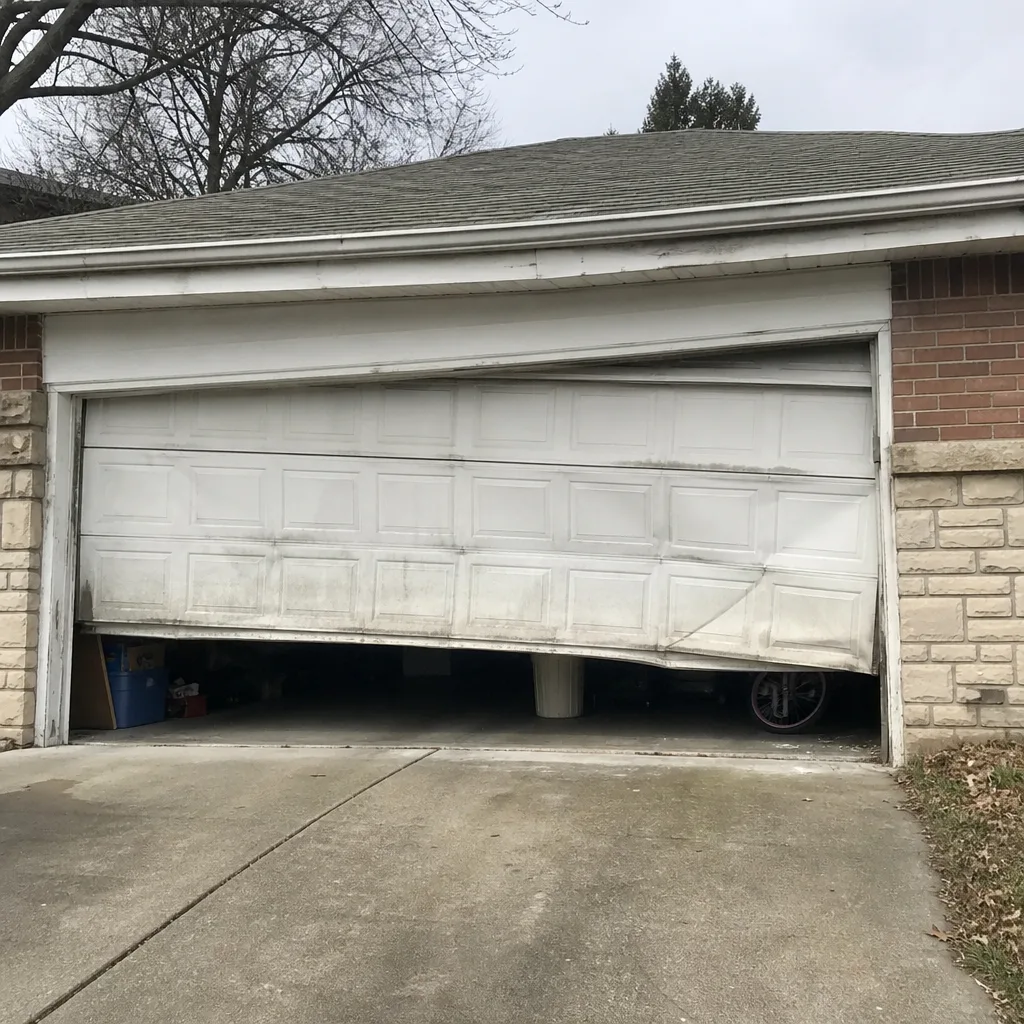 Before
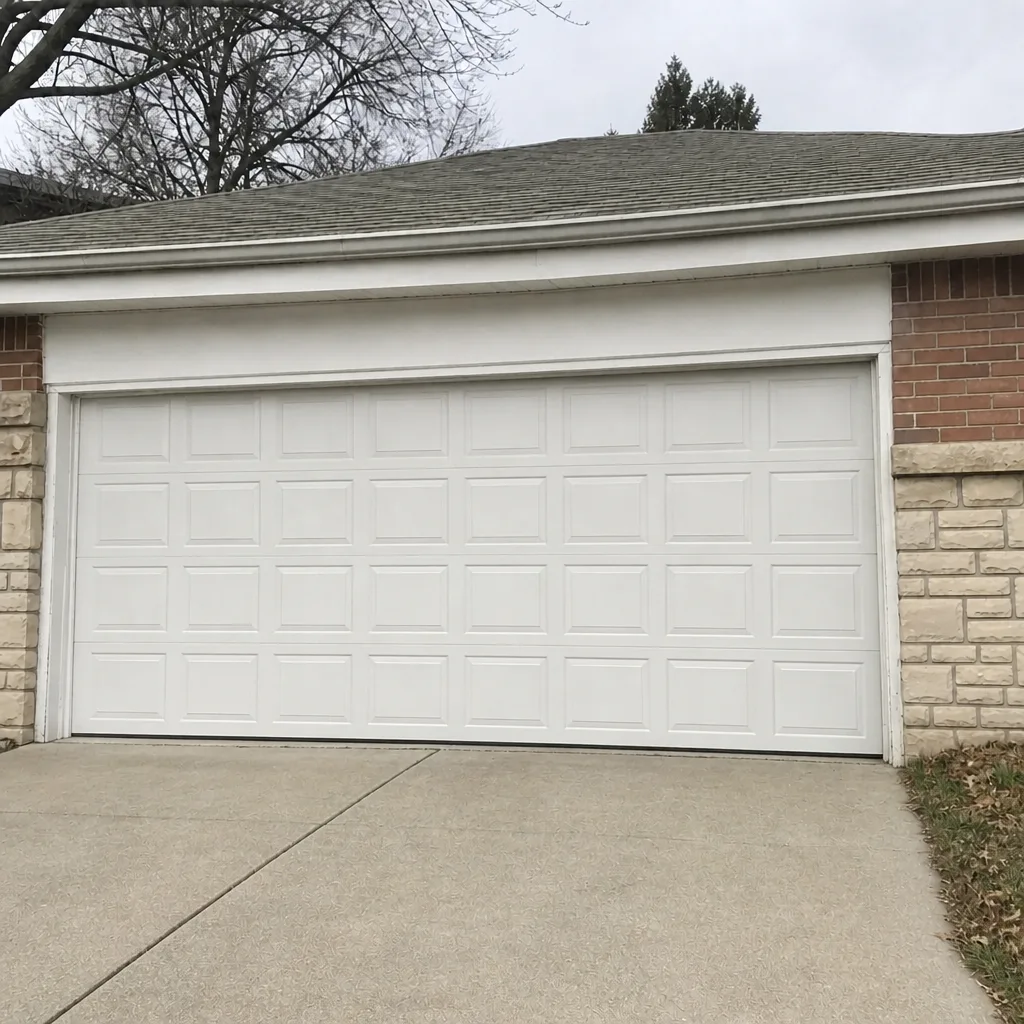 After
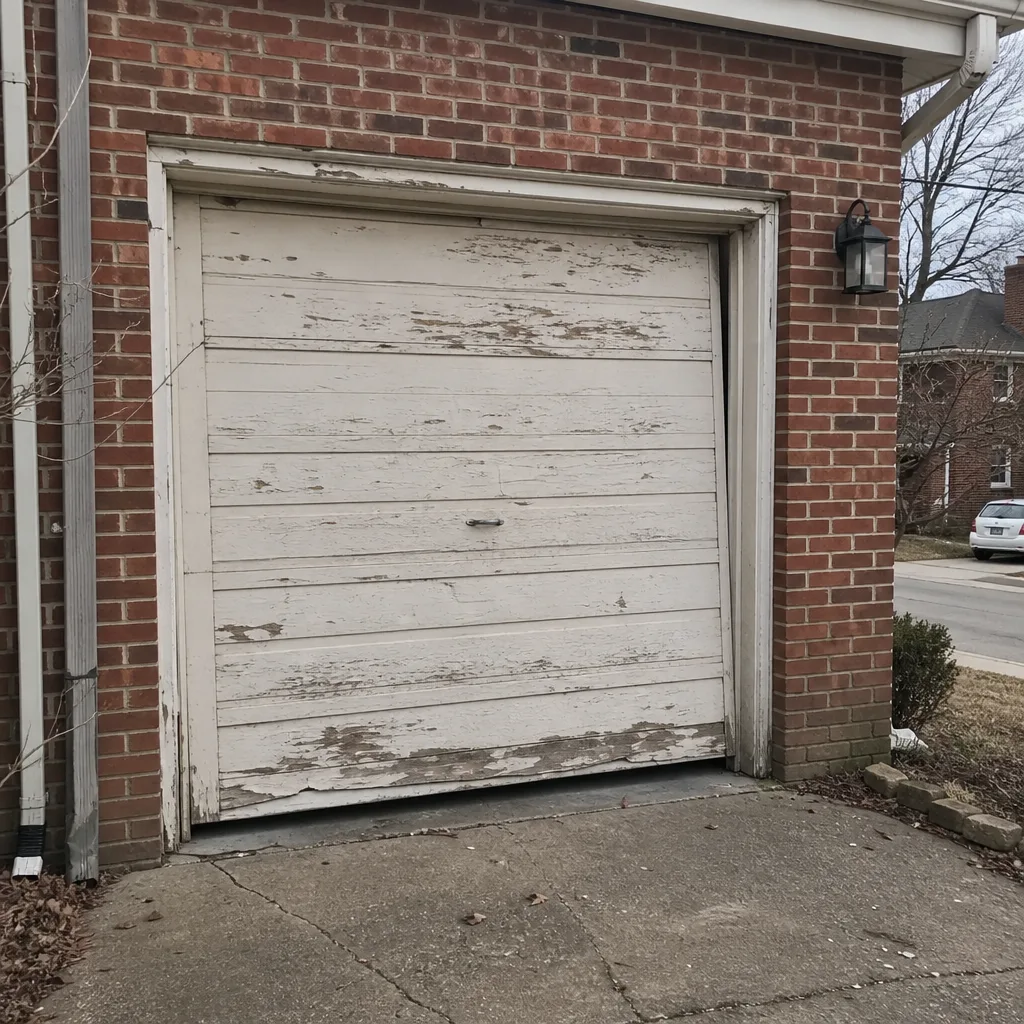 Before
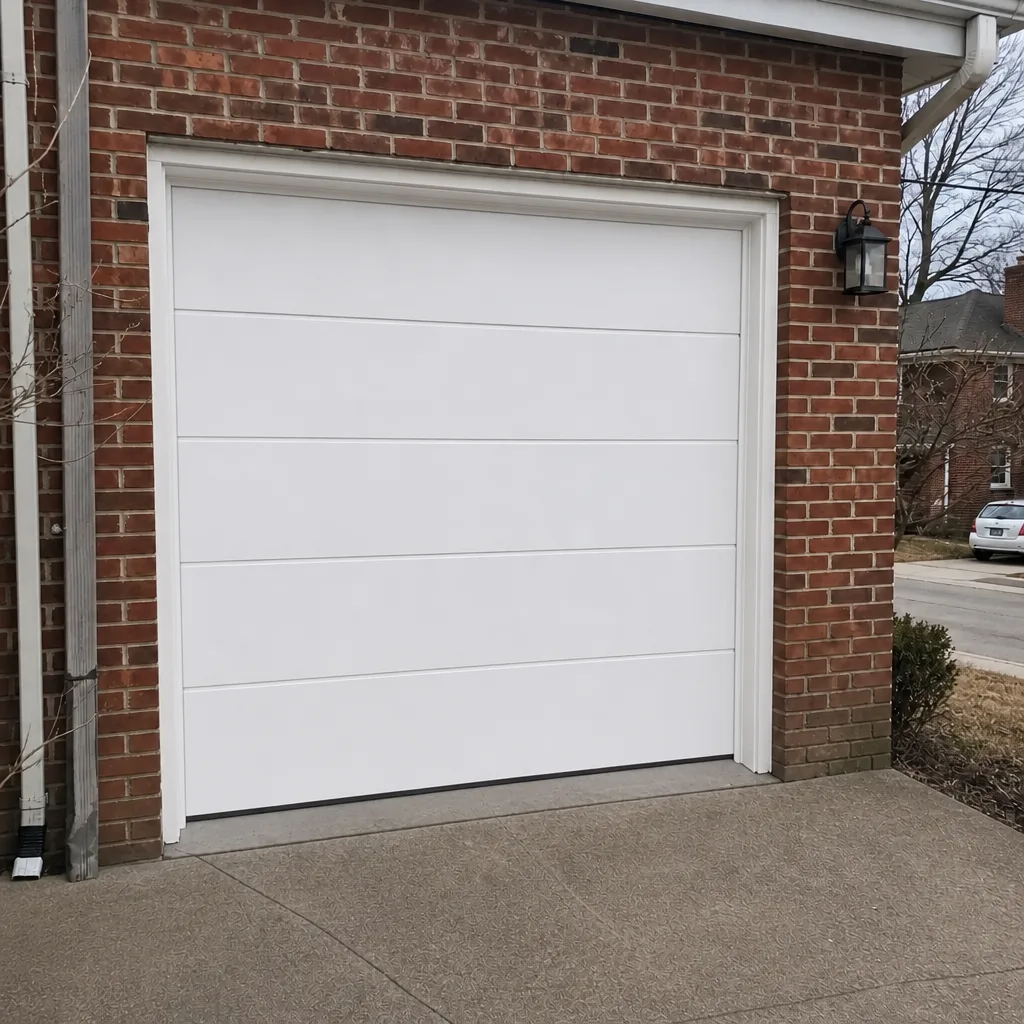 After
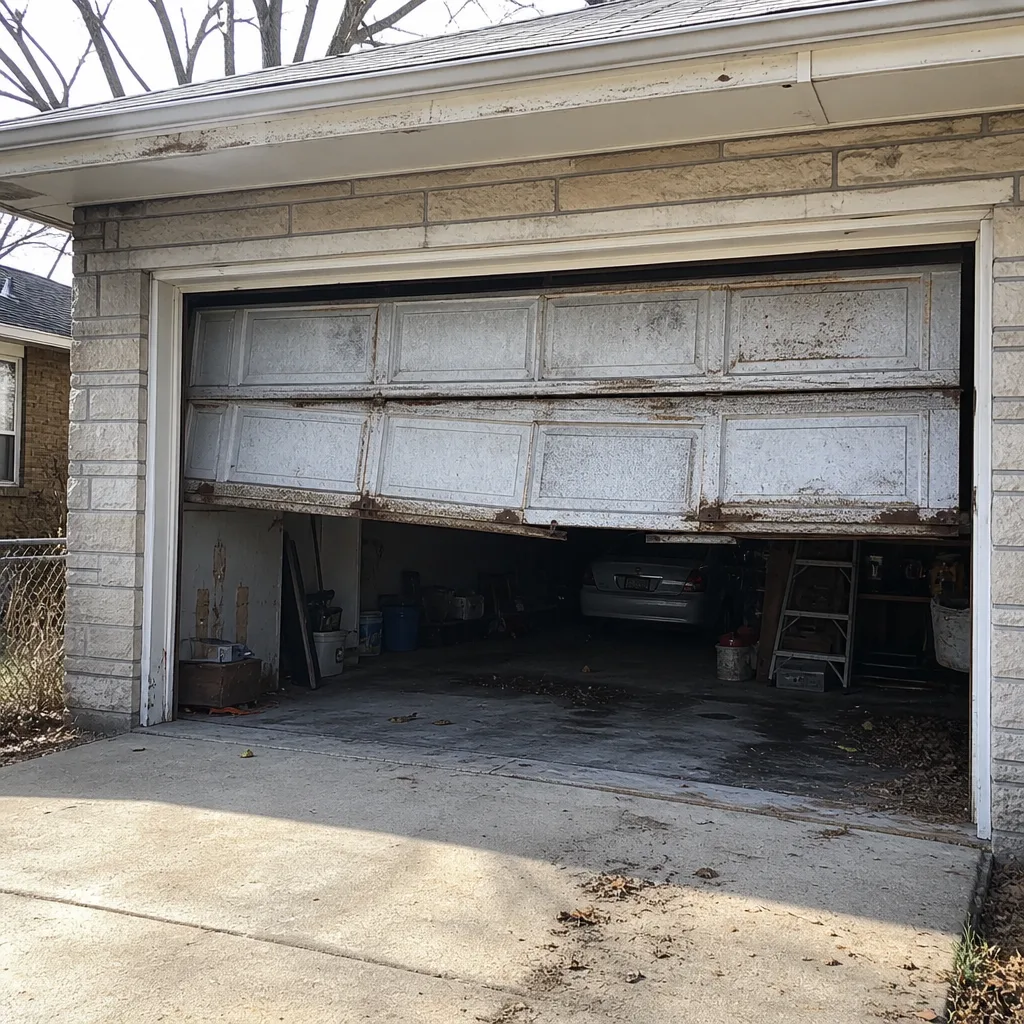 Before
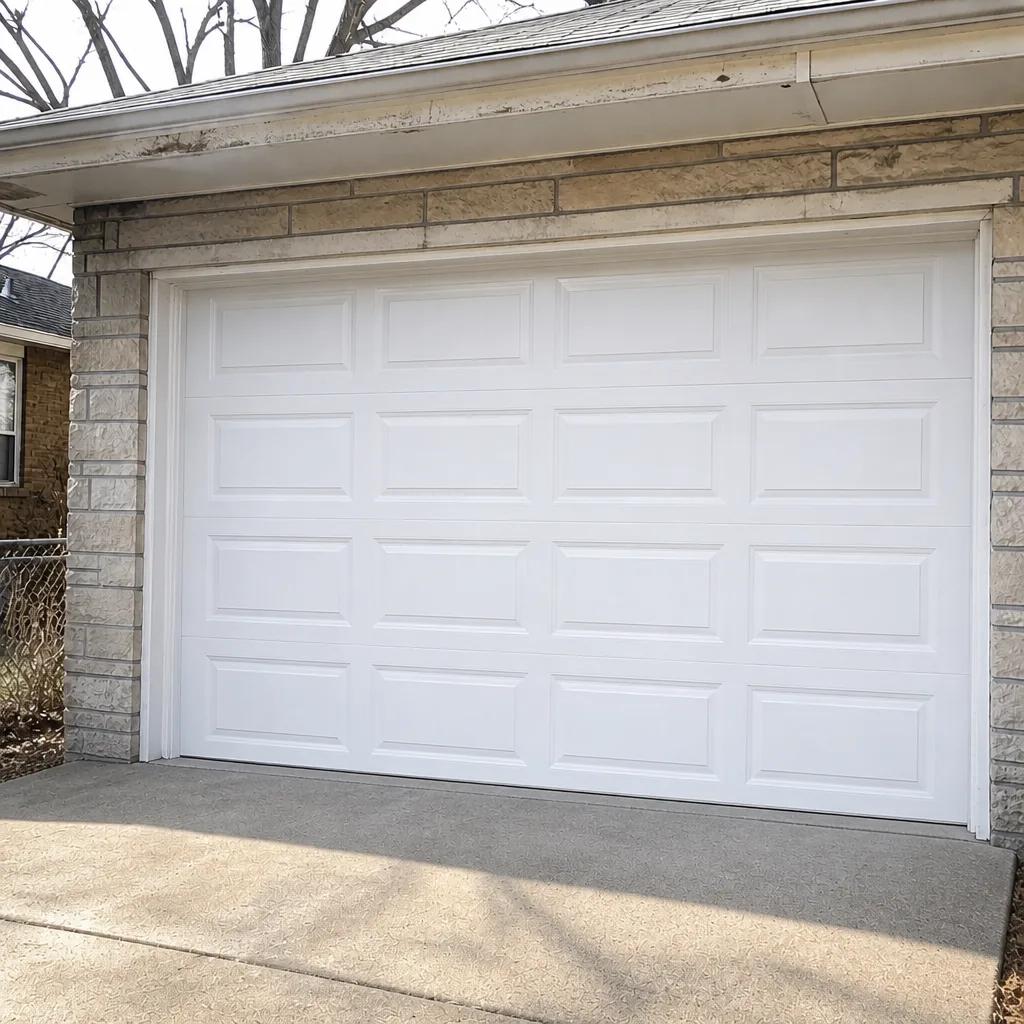 After
When to Call a Professional
Some jobs are worth a call before you do anything else: a spring that’s visibly broken, a door that won’t open or closes unevenly, a loud bang from the garage followed by the door not working, or an opener that runs but doesn’t move the door. Those are the situations where a wrong guess costs more than the call. The same is true for anything involving the torsion system – leave it to a trained technician. On new installation or replacement, call before you shop, not after; the measure visit determines what will actually fit and work, and it’s the cheapest part of the project. Garage Door Repair St. Louis Hills offers free estimates in St. Louis Hills – call (833) 991-7150.
Frequently Asked Questions
Typical torsion spring repair runs $180-$340 for a single spring; a matched pair is usually replaced together and costs about twice that. Extension spring replacement is often $130-$260 for one spring. The written estimate sets the final price, and it’s given before any work starts. Call (833) 991-7150 for an exact quote – estimates are free.
If your garage has less than about 12 inches of clearance above the door, or if there’s ductwork, plumbing, or a beam above the opening, you likely need a low-headroom track setup. This is common in the older homes in this neighborhood. The only way to know for sure is a measurement on site. Call (833) 991-7150 to schedule a measure.
Replace both. When one torsion spring breaks, the other is typically the same age and hours, so it’s near failure too. Swapping one now and the other in a few months usually costs more in total than doing the pair together. The pair cost is about double the single-spring range. Call for a quote – estimates are free.
Most springs last 5-10 years in typical use, though cycle count matters more than calendar age. Missouri’s freeze-thaw cycles stress the door hardware more than a mild climate, so a door here may see more cycles per year than the same door in a milder climate. If your door is over about 8 years old and starting to feel heavy, a spring check is worth doing.
Our technicians work on the full range of residential garage door and opener brands, and we serve the St. Louis Hills area directly. Ask for licensing and insurance specifics when you schedule – we’re happy to confirm what applies in your situation. Call (833) 991-7150 to schedule.
No. Your written estimate is the price you pay for the work described. If we find something additional during the job – a cracked hinge, a track issue we couldn’t see on the initial visit – we stop, tell you, and get your approval before touching it. No work happens without a price you’ve already agreed to.
Very likely yes. We work on the major residential brands you’re likely to have, including LiftMaster, Chamberlain, Genie, and Craftsman, and we also handle Raynor and other common units. Tell us the brand and model when you call and we’ll confirm before booking the visit. For anything the brand label doesn’t show, we can identify it on the service call.
Repair wins when the door panels are sound, the springs and hardware are serviceable, and the opener is working. Replace when you’re stacking repairs – warped panels plus failing springs plus a tired opener plus a finish that’s gone. A rough rule of thumb: if repair costs over the next few years would approach the price of a new door, replacement is the better spend. Call for a diagnosis and we’ll give you a straight answer.
The Bottom Line
Garage door decisions in St. Louis Hills don’t often match the generic advice you’ll find online. Older homes in this neighborhood frequently have non-standard openings, shallow headers, and low-headroom requirements that force different hardware choices than a builder-grade subdivision door. Materials matter here too – steel handles Missouri’s humidity swings and freeze-thaw winters best, fiberglass is a solid alternative, and wood fits the historic look but needs real maintenance. Springs are the wear item to expect, openers are worth diagnosing rather than replacing blindly, and the repair-versus-replace call comes down to how much is failing at once. Get the measure, get the written estimate, and let the price you’ve agreed to be the price you pay.
When you’re ready to move forward on a repair, opener fix, or new door installation, call (833) 991-7150 for a free estimate in St. Louis Hills. We work the brands in your garage, stock the parts that shorten wait times, and diagnose before we recommend anything. That’s the whole approach.
Written by the team at Garage Door Repair St. Louis Hills.